Xebar · 2024
Crypto to cash in 30 seconds, no crypto knowledge needed
Founding product designer. I took V1 from concept to build-ready in two days, then designed the first phase of V2, working with the PM and Engineering.
- processed in Q1
- ₦1.8B+
- processed in Q1
- cashed out
- 79%
- cashed out
- fastest off-ramp
- 30 sec
- fastest off-ramp
- users today
- 100K+
- users today
The problem
Cashing out was a negotiation, and 5 of 12 people had already lost one
Nigeria is one of the world’s most active crypto markets: sixth on Chainalysis’s 2025 adoption index, with $92.1B received in a year. People hold stablecoins to protect savings and get paid by clients abroad. But spending that money means turning it into naira, and for most people that meant a P2P marketplace.
Find a trader → agree a rate → send crypto → wait → check the payment is real → dispute it if it isn’t
- Fraud with no recourse. Fake payment screenshots and impersonation. Once crypto is sent, it’s gone.
- Slow, unreliable payouts. Bank delays and trader disputes left people waiting hours, sometimes days, while prices moved.
- The rate shown isn’t the rate paid. Breet’s study of 100+ live P2P trades found merchants rounding down or demanding ₦500–1,000 before releasing funds.
- A second transfer for most. Freelancers, bettors and shoppers cashed out on P2P, then had to move the money again.
The goal
Naira in the bank, safely, with no trader in the middle
With the PM and Engineering, I set the bar the design would be judged on before drawing anything: at least 65% of sign-ups completing an off-ramp, and every off-ramp landing within two minutes of KYC.
I had two days to design V1, so the real work was deciding what to ask for, and when. Here’s what I chose, and what I traded away.
Show where the money lands, before anything else
I put bank setup at the very start, before a user ever sees a wallet address. Adding an account takes 15–25 seconds, accounts are verified on entry, and users can set a default, which removes that screen from every future off-ramp. By the time someone sends crypto, the only open question is timing.
The trade-off: a longer first session. I argued it was worth it: a one-time step up front costs less than doubt at the moment of sending.
KYC at the moment of value
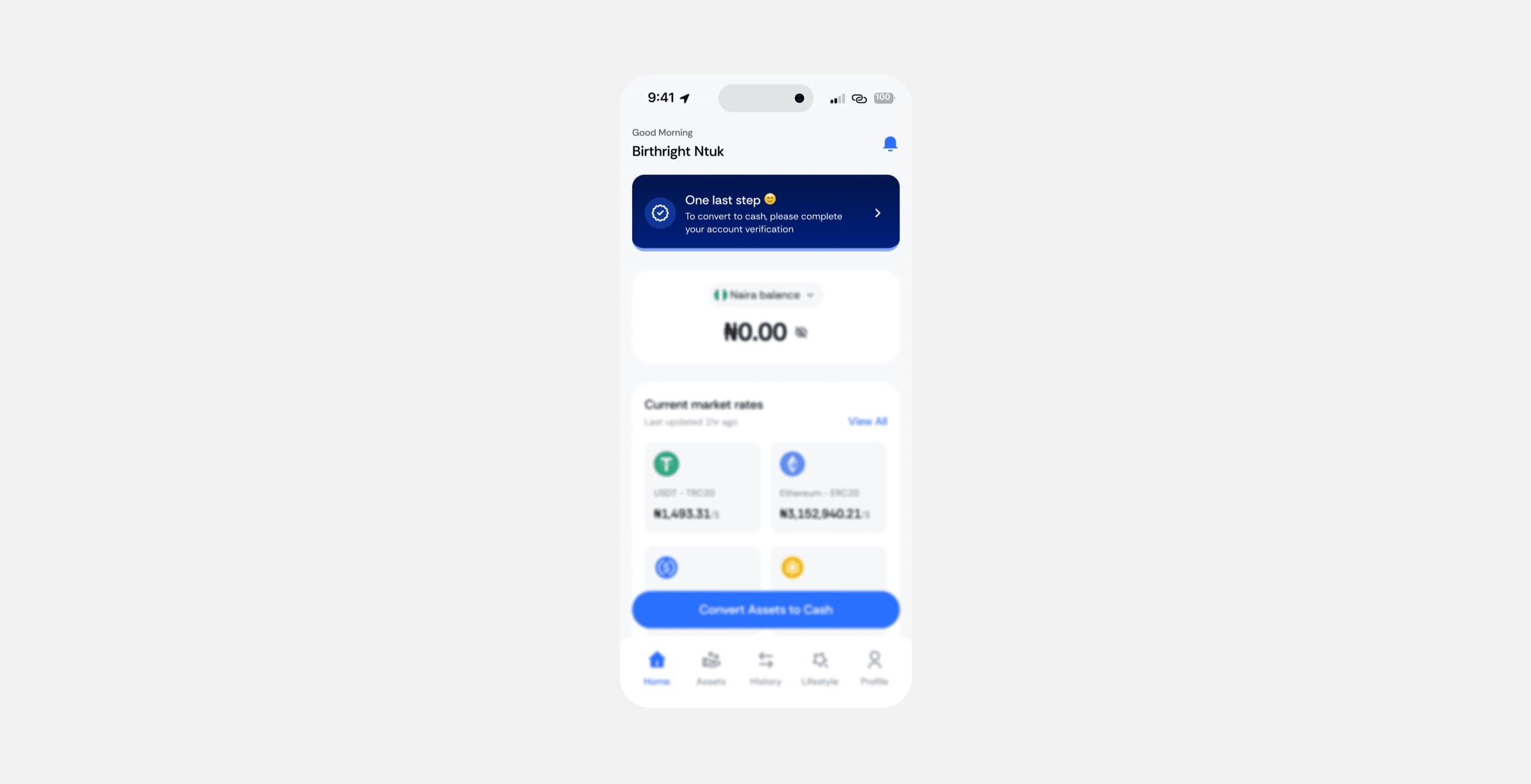
KYC was non-negotiable: nobody could move money without it. But where it sat would decide whether people pushed through or dropped off. I weighed three placements:
I chose the third. KYC appears once people have seen their rate and where their naira will land, with three ways to verify (BVN, NIN or passport) so nobody gets stuck on one document.
Only the questions a bank would ask
Crypto brings vocabulary most users don’t need: networks, confirmations, gas fees. I cut the flow down to what a person would ask at a bank. What am I selling? How much naira do I get? Where does it go? Network details appear only where picking the wrong one could cost money.
- Pick the asset to convert.
- Choose the account to be paid into, skipped when there’s a default.
- Send to your Xebar address. Naira lands in as little as 30 seconds.
The bank isn’t always the destination
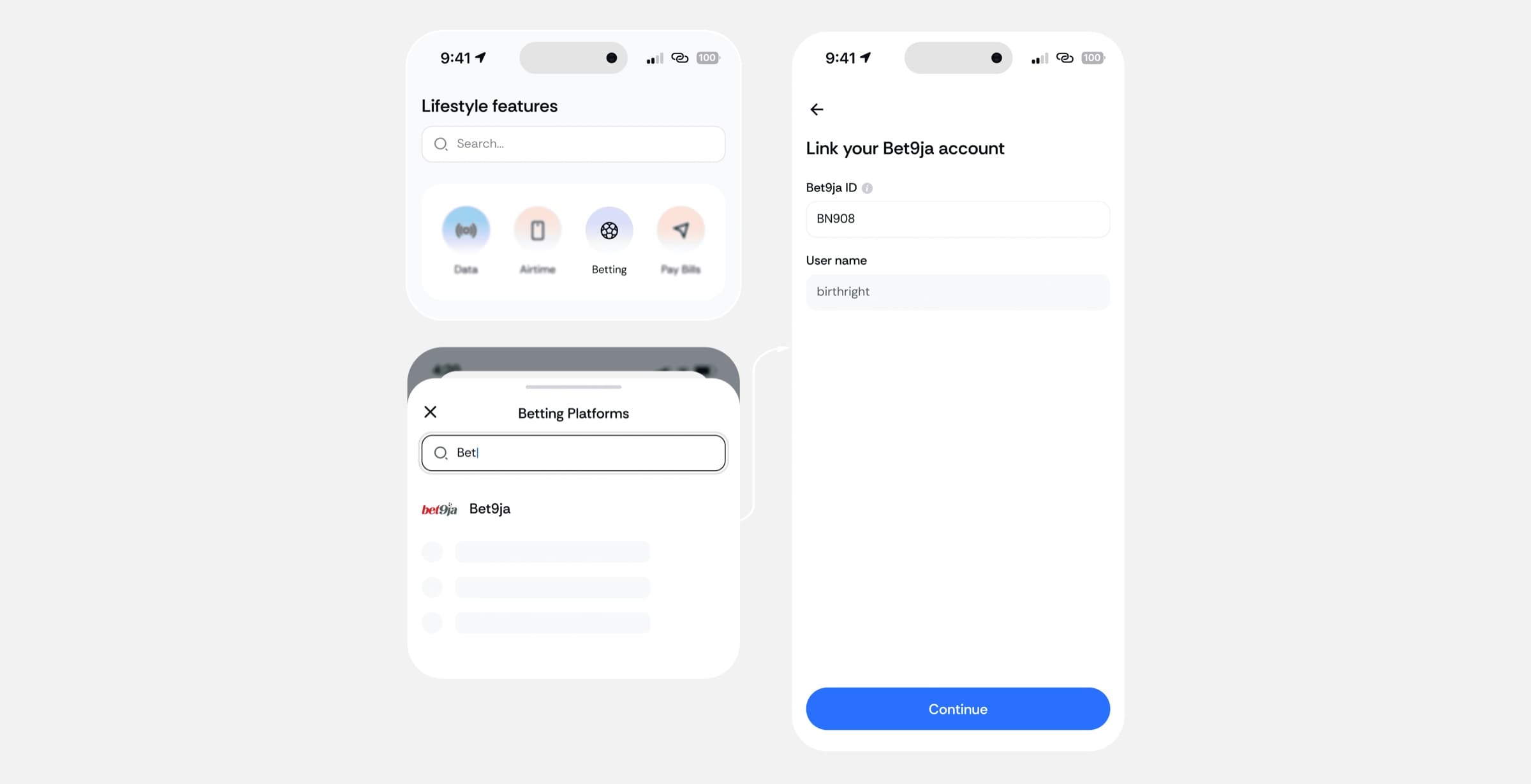
For many users, the bank was a stop on the way to a betting wallet, an online store or a client payout. I designed partner integrations that send converted funds straight to those platforms, removing the second transfer.
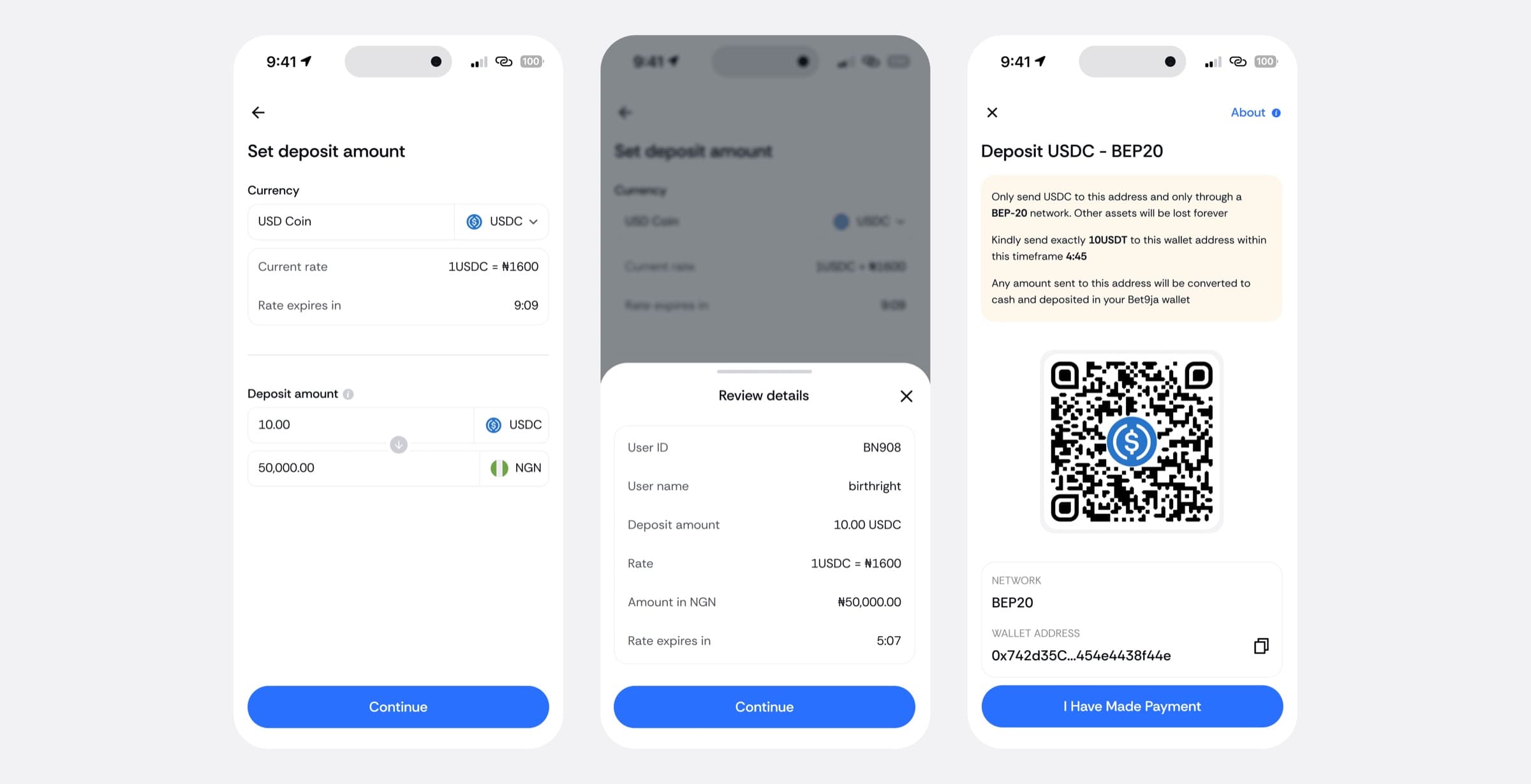
Scope
Two days to turn an idea into a product
V1 had a hard limit: two days from concept to build-ready. That made scoping the real design decision. I kept only what proved the core promise, crypto in, naira out, no stranger in between, and signposted what was coming next, like multiple balances and wallet features.
V1 proved people would trust Xebar with real money. I stayed on for the first phase of V2, adding multiple balances, in-app swap, price alerts and gamification as the product grew from 4,000+ users at beta to 100K+ today.
More from the app
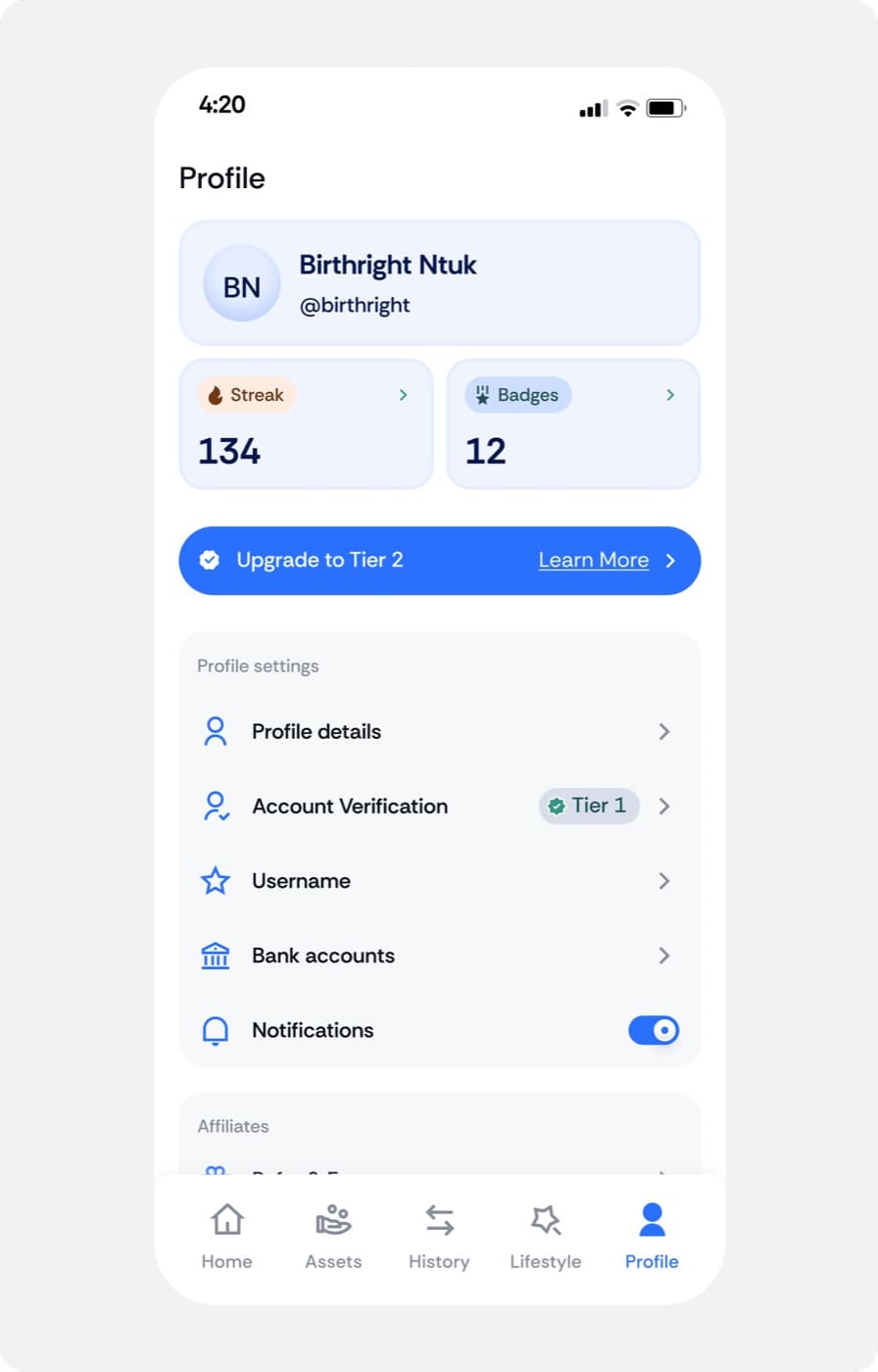
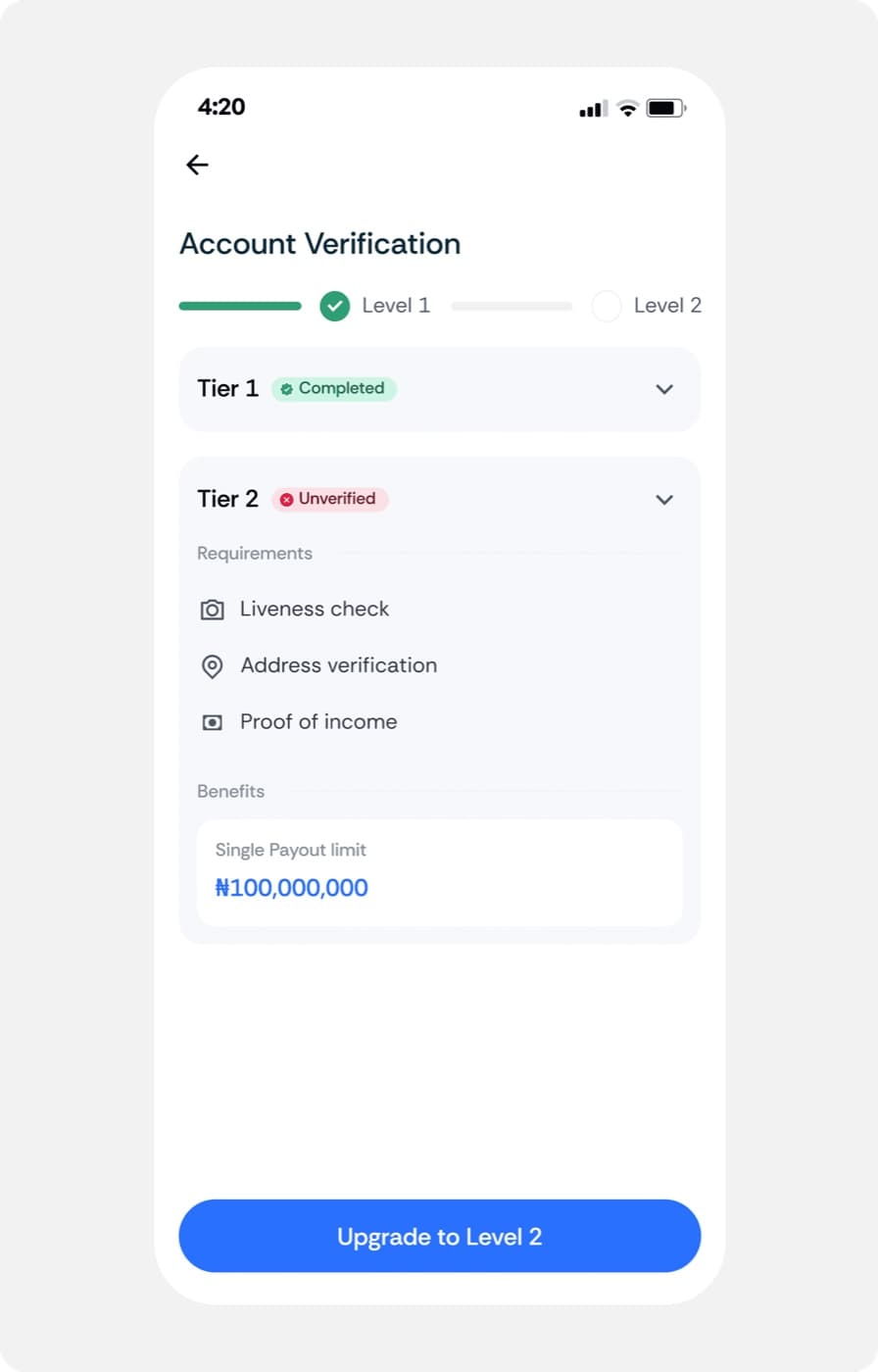
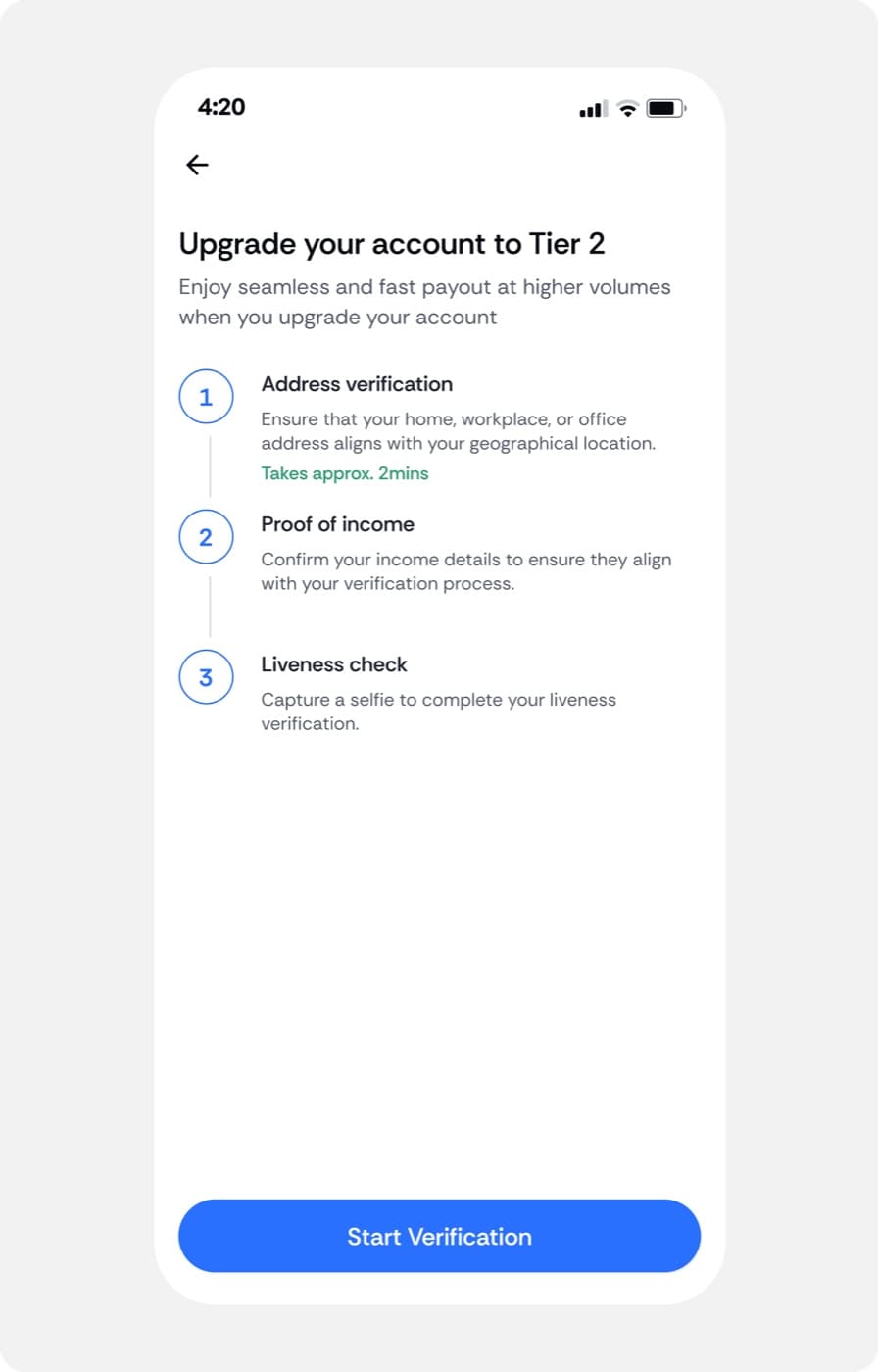
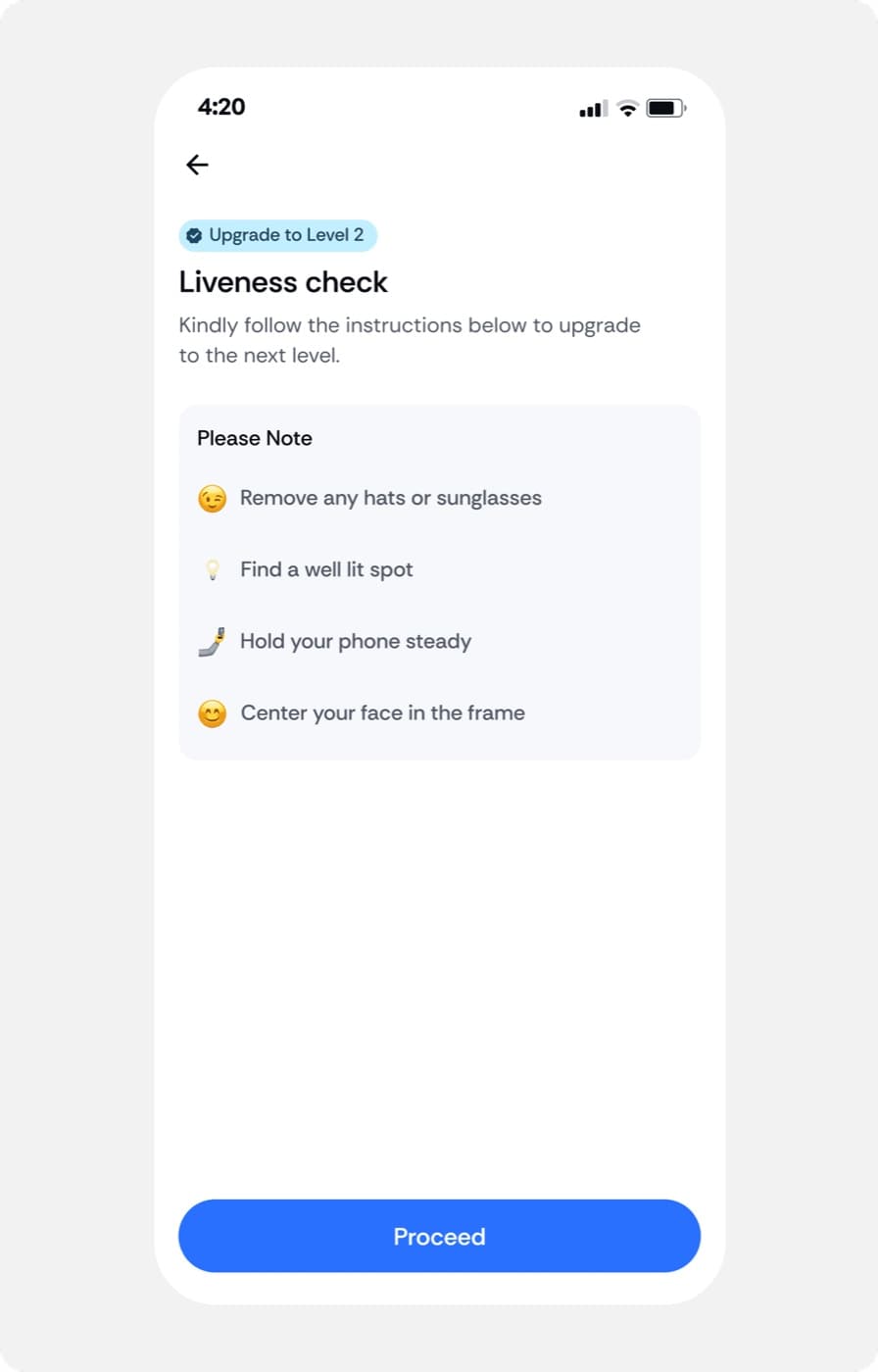
Profile and tiered verification
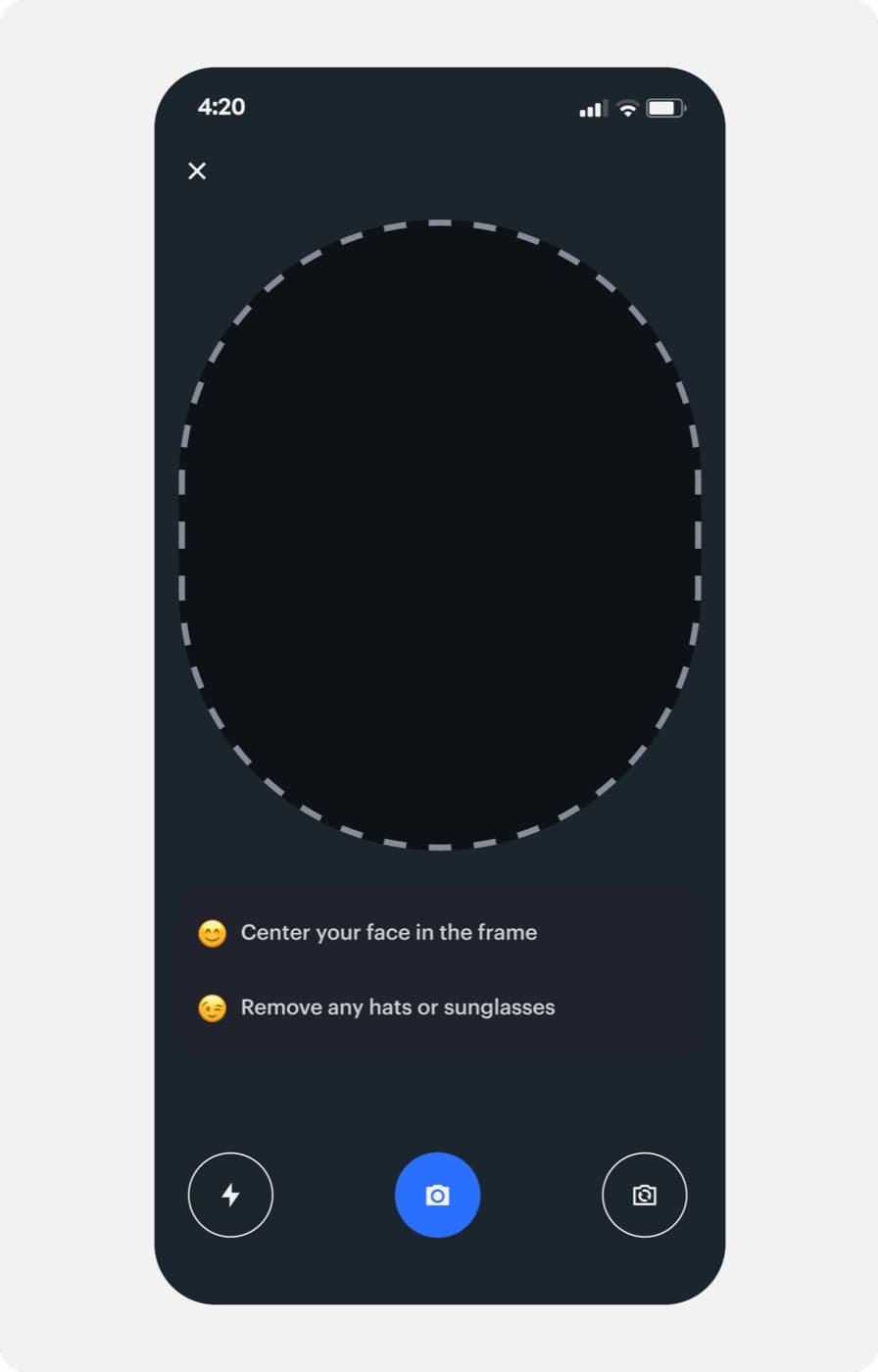
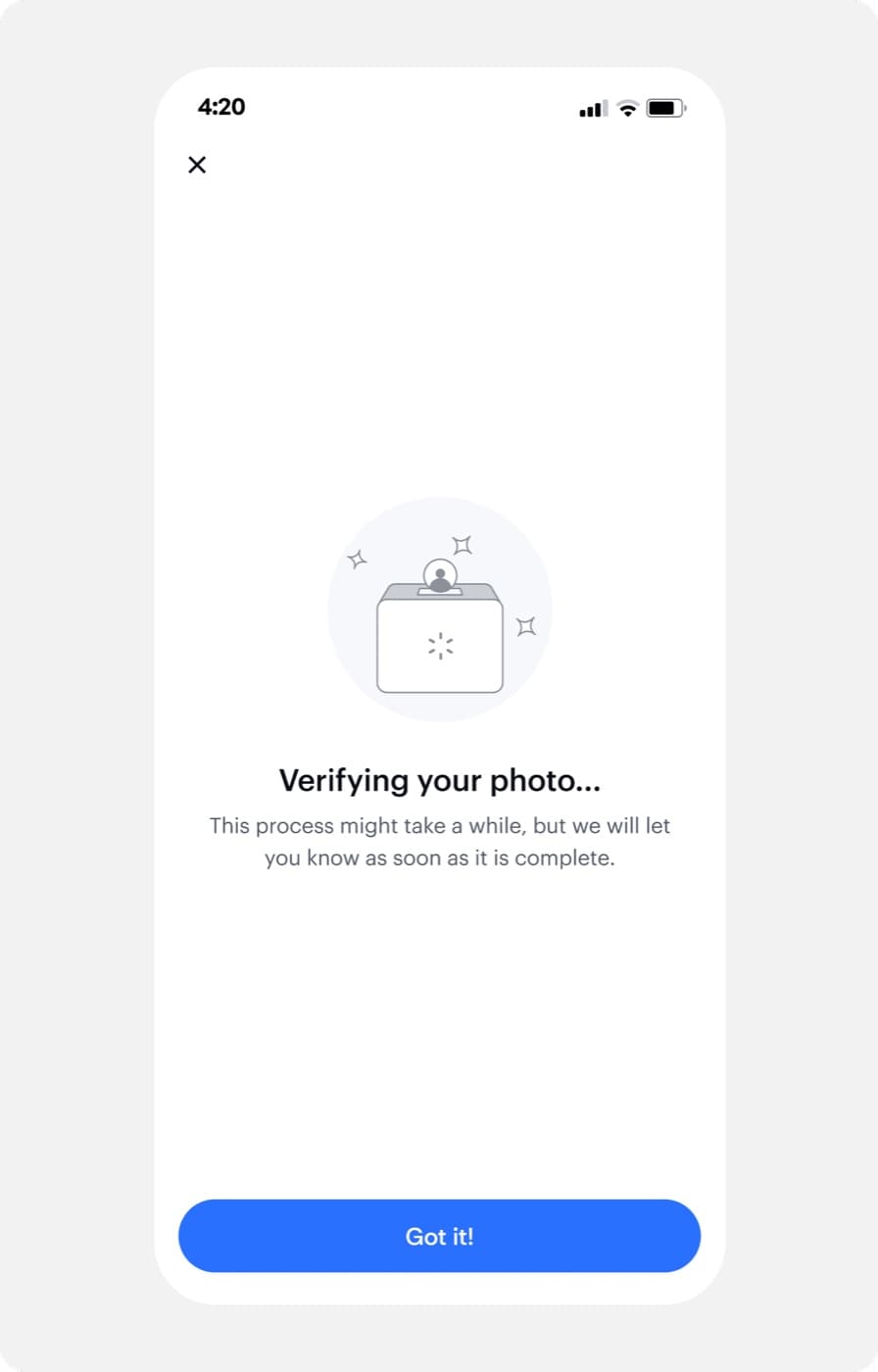
Tier 1 gets people cashing out. Tier 2 raises the payout limit, and walks people through address, income and a liveness check one step at a time.